An exquisite antique box is far more than a mere vessel for storage; it's a meticulously crafted architectural narrative that captures the essence of 19th-century social rituals and artisanal mastery. Whether you're drawn to the shimmering inlay of French sterling silver or the whimsical detail of Black Forest carvings, these boxes & caddies represent a pinnacle of decorative art from the Georgian and Victorian eras. You likely recognize that owning such a piece is about more than aesthetics, as it preserves a tangible connection to a vanished world of refinement and historical significance.
Finding the right piece can be a complex journey, especially when the fear of high-priced reproductions or confusion over period-specific materials creates hesitation. This guide will provide the specialized expertise needed to evaluate the finest 18th and 19th-century examples for your private collection. We'll examine the functional differences between tea caddies and jewelry chests, decode Palais Royal hallmarks, and explore the tactile luxury of Boulle marquetry. By the end, you'll have the clarity to identify museum-quality heirlooms and the confidence to source them from curators who share your deep reverence for history.
Key Takeaways
- Understand how 18th and 19th-century social rituals influenced the meticulous design and craftsmanship of these exquisite decorative pieces.
- Learn to distinguish between the opulent mother-of-pearl inlays of Palais Royal and the intricate linden wood carvings characteristic of the Black Forest region.
- Discover how to select the ideal boxes & caddies for your collection by comparing the interior architecture of fitted sewing boxes with the open-well designs of jewelry chests.
- Gain the technical knowledge required to verify age and origin through French sterling silver hallmarks and the assessment of original silk and velvet linings.
- Acquire the confidence to navigate the market by understanding the provenance and rare features that define a museum-quality heirloom.
Understanding the Heritage and Artistry of Antique Boxes
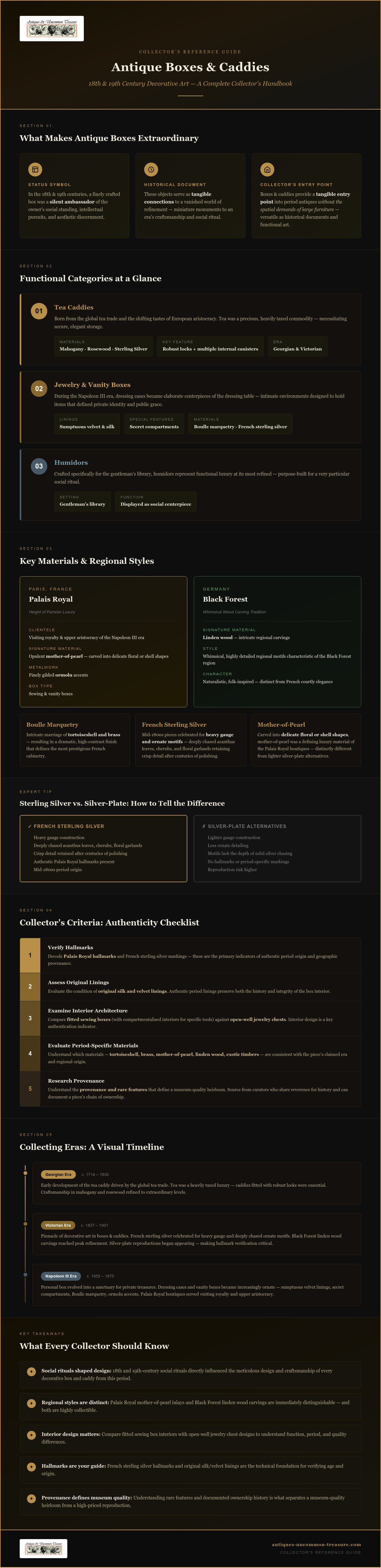
In the 18th and 19th centuries, an exquisite box was far more than a simple container; it was a silent ambassador of the owner's social standing, intellectual pursuits, and aesthetic discernment. These objects occupied prominent positions in the most intimate and public spaces of the European home, acting as miniature monuments to the era's craftsmanship. A finely inlaid box resting upon a library desk or a shimmering casket placed within a lady’s boudoir signaled a level of refinement that few other personal items could match. For the modern enthusiast, collecting boxes & caddies offers a unique versatility, as these pieces serve as both historical documents and functional art that integrates seamlessly into contemporary interiors.
The enduring appeal of these items lies in their dual nature as status symbols and private sanctuaries. In an age where materials like mother-of-pearl, exotic timbers, and precious metals were rare luxuries, the possession of a masterfully crafted box was a clear indicator of wealth. Whether it was a humidor designed for a gentleman's library or a delicate sewing kit for a drawing room, each piece was intended to be touched, admired, and displayed as a centerpiece of social ritual. This category remains a favorite for those starting a collection because it provides a tangible entry point into the world of period antiques without the spatial demands of large furniture.
The Ritual of the Tea Caddy
The history of the caddy is intrinsically linked to the global tea trade and the shifting tastes of European aristocracy. Originally, tea was imported and stored in Chinese porcelain jars, but as the dried leaf became a precious and heavily taxed commodity in the West, the need for secure, elegant storage grew. This necessity birthed the creation of specialized tea caddies crafted from mahogany, rosewood, and sterling silver. Because tea was so costly during the Georgian and Victorian eras, these containers were almost always fitted with robust locks to prevent pilfering. The craftsmanship found in these chests is remarkable, often featuring multiple internal canisters to separate different varieties of tea, reflecting the sophisticated palate of the period's elite.
The Personal Sanctuary: Jewelry and Vanity Boxes
During the Napoleon III era, the concept of the personal box evolved into a sanctuary for one's most private treasures. Dressing cases and vanity boxes became increasingly ornate, transitioning from simple functional storage to elaborate centerpieces of the dressing table. These pieces often featured sumptuous velvet linings, designed to protect delicate gemstones, and ingenious secret compartments that held private correspondence or heirloom jewels. The use of materials like Boulle marquetry and French sterling silver transformed these objects into symbols of tactile luxury. They weren't just boxes; they were intimate environments designed to hold the items that defined a person's private identity and public grace.
Key Materials and Regional Styles: From Palais Royal to Black Forest
The allure of antique boxes & caddies often begins with the tactile and visual diversity of the materials used in their construction. During the 19th century, European craftsmen pushed the boundaries of cabinetry and metalwork to create items that were as durable as they were beautiful. Boulle marquetry remains one of the most sophisticated techniques from this era. This process involves the intricate marriage of tortoiseshell and brass, resulting in a dramatic, high-contrast finish that defines the most prestigious French cabinetry. Similarly, French sterling silver from the mid-1800s is celebrated for its heavy gauge and ornate motifs. Unlike lighter silver-plate alternatives, these pieces feature deeply chased acanthus leaves, cherubs, and floral garlands that retain their crisp detail after centuries of polishing.
Palais Royal: The Height of Parisian Luxury
The boutiques of the Palais Royal in Paris catered to an exceptionally exclusive clientele, including visiting royalty and the upper aristocracy of the Napoleon III era. These items are instantly recognizable by their opulent use of mother-of-pearl, which was often carved into delicate floral or shell shapes and accented with finely gilded ormolu. An authentic Palais Royal sewing or vanity box is a marvel of internal organization. It will typically feature a sumptuous silk-lined interior and a complete suite of tools crafted from 18k gold or mother-of-pearl. When evaluating these rare specimens, look for the quality of the opaline glass and the precision of the velvet-lined compartments, which were designed to hold everything from crystal scent bottles to tiny silk thread winders.
Black Forest: Nature Captured in Wood
In contrast to the gilded glamor of Paris, the Black Forest style offers a rustic, soulful charm rooted in the Swiss village of Brienz. Authentic 19th-century carvings are distinguished by their remarkable depth and the lifelike quality of their subjects. Common motifs such as bears, stags, and dense alpine foliage were hand-chiseled from linden wood, a material favored for its fine grain and ability to hold microscopic detail. Over time, this wood develops a deep, honey-colored patina that is impossible to replicate in modern, mass-produced versions. It's essential to look for subtle chisel marks that indicate a master carver's hand, as these distinguish a museum-quality piece from later machine-made imitations. For those seeking to add a piece of this history to their home, exploring a curated selection of French antiques can reveal the remarkable diversity of these regional styles.
Whether you're drawn to the architectural precision of a sterling silver casket or the whimsical nature of a hand-carved humidor, understanding these materials is the first step in building a significant collection. Each regional style tells a story of the local resources and the specific social demands of the period's elite, making these boxes & caddies much more than simple decorative objects.
Comparing Functional Categories: Tea Caddies, Jewelry Boxes, and Humidors
Selecting from an expansive collection of over 1,600 boxes & caddies requires a discerning eye for both aesthetic harmony and intended utility. While a grand Boulle marquetry chest might serve as a magnificent mantel centerpiece, a smaller Palais Royal specimen is often better suited for the intimate scale of a writing desk. For the modern connoisseur, the choice often rests on whether the item will serve as a functional repository for modern treasures or as a purely historical display piece. Jewelry chests, for instance, typically feature open-well interiors or simple velvet-lined trays, offering a versatile space for contemporary pieces, whereas fitted sewing boxes demand a more specific appreciation for their original, specialized tools.
Tea Caddies vs. Sugar Boxes
The architectural differences between tea caddies and sugar boxes reflect the specific preservation needs of the 18th and 19th centuries. A true tea caddy is often identified by its protective lead or tin lining, a necessary feature designed to maintain the freshness of the precious leaves by shielding them from light and moisture. Collectors should look for single, double, or triple-compartment configurations, which allowed the owner to blend different varieties of tea. In the most prestigious examples, a central aperture was reserved for a glass mixing bowl, where the blends were finalized before service. This level of complexity distinguishes the caddy from the simpler, often unlined sugar box, which was designed to hold the solid loaves of sugar common in that era.
Specialized Storage: Sewing and Writing Slopes
Few items capture the meticulous nature of 19th-century life quite like sewing boxes and writing slopes. A Palais Royal sewing box is a masterpiece of miniature engineering, featuring recessed compartments for mother-of-pearl thread winders, silver thimbles, and delicate needle cases. Similarly, writing slopes, often referred to as lap desks, are prized for their slanted, leather-lined surfaces and integrated recesses for crystal inkwells and pen trays. Because these items were designed as self-contained workstations, they command a significant premium when found with their original, complete toolsets intact. The presence of hidden drawers or secret springs, often found in high-end French antiques, adds an extra layer of intrigue for the dedicated collector.
For those interested in the social history of the library or smoking room, antique humidors and cigar chests offer a different set of technical merits. These pieces were constructed to regulate humidity, often featuring heavy wood walls or metal linings to protect the integrity of the tobacco. Whether it's a whimsical Black Forest humidor or a formal Napoleon III cigar cabinet, the scale of these items makes them ideal for display on a sideboard or a substantial study table. When curating a collection of specialized boxes & caddies, evaluating the condition of the interior seal is paramount, as it speaks to the quality of the original construction and the care the piece has received over the last century.
Collector’s Criteria: Evaluating Authenticity, Condition, and Provenance
Evaluating a potential acquisition requires a blend of historical knowledge and forensic observation. For the dedicated collector, the journey to find museum-quality boxes & caddies involves looking beyond surface beauty to verify structural and historical integrity. Authenticity is often hidden in plain sight, etched into the metal or woven into the very fabric of the interior linings. A piece’s pedigree isn't merely about its age, but the story told by its materials and the marks left by its creators.
Hallmarks and Maker’s Marks
Identifying the origin of French silver items requires an understanding of the state-mandated marking system. The most common mark found on 19th-century French sterling silver is the head of Minerva, which signifies a specific fineness of silver. A "Minerva 1" indicates 950/1000 purity, while a "Minerva 2" denotes 800/1000. Beyond these official stamps, you'll find the lozenge-shaped maker's mark of the individual silversmith. Identifying a prestigious maker can significantly elevate a piece's rarity and market value. To deepen your expertise, you can learn more about identifying French hallmarks through our specialized guides.
Material Integrity and Restoration
A critical aspect of evaluation is distinguishing between honest, age-appropriate wear and damage that compromises a piece's value. When collecting these boxes & caddies, you should be wary of "marriage" pieces, where components from two different boxes have been combined to create a single, seemingly complete item. This is often seen in fitted sewing boxes where the tools don't perfectly match the recesses. Original, working keys are especially prized in high-end tea caddies, where the lock was a central functional feature and a symbol of the owner's control over their luxury goods.
While original silk and velvet linings may show fraying, they're often more desirable than modern replacements. Preservation is generally preferred over total restoration unless the original material has completely perished. Similarly, documentation or markings that link a box to a specific estate or historical figure from the Napoleon III era can significantly enhance its allure. If you're ready to acquire a piece with a verified pedigree, we invite you to explore our current selection of French antiques, where each item is meticulously vetted for authenticity.
Discovering Uncommon Treasures: Standout Pieces for Your Collection
Finding a piece that resonates with your personal aesthetic is the ultimate reward of connoisseurship. Within a truly curated collection, the diversity of 18th and 19th-century boxes & caddies offers an endless array of narratives, from the shimmering elegance of French sterling silver jewelry caskets to the whimsical charm of carved humidors. These items aren't just remnants of the past; they're vibrant survivors that bring a sense of history and tactile luxury to the modern home. For many collectors, the search for a specific jewelry casket featuring intricate repoussé work, where the silver is hammered from the reverse to create a high-relief design, represents the pinnacle of 19th-century metalwork appreciation.
The investment potential of Palais Royal vitrines and sewing boxes remains a significant draw for the serious collector. These specimens, often featuring delicate mother-of-pearl and ormolu accents, were originally sold in the most exclusive Parisian boutiques and have maintained their desirability for over two centuries. Similarly, selecting the perfect antique humidor or cigar chest for a sophisticated smoking room requires an appreciation for both form and function. A masterfully crafted cigar cabinet from the Napoleon III era, perhaps featuring rich ebony or rosewood, serves as a testament to the slow, deliberate pace of historical leisure rituals.
Standout Selections from Our Gallery
Our gallery features a remarkable breadth of inventory that caters to the most discerning tastes. A typical high-end offering might include a Napoleon III Boulle work chest, where the intricate dance of brass and tortoiseshell creates a visual masterpiece. We also take great pride in the tactile beauty of our Tantalus sets and cigar chests, which often feature hidden mechanisms and sumptuous linings. For those who appreciate the miniature arts, snuff boxes topped with hand-painted portrait miniatures offer a rare glimpse into the personal lives and fashions of the Georgian and Victorian elite. Each of these items has been chosen for its exceptional condition and historical significance.
Acquiring Your Next Heirloom
Acquiring a museum-quality piece requires more than just a keen eye; it demands the guidance of a specialist who understands the nuances of provenance and material integrity. With over 22 years of established reputation, we've dedicated ourselves to sourcing the rarest French antiques and European collectibles. Browsing an extensive collection of over 1,600 unique boxes & caddies allows you to compare styles and materials with a level of detail rarely found in modern marketplaces. Whether you're seeking a specific silver hallmark or a rare Black Forest motif, our expertise ensures that your purchase is a verified piece of history. We invite you to explore our full collection of antique boxes & caddies and discover the next cornerstone of your private collection.
Preserving History Through Your Private Collection
Acquiring an antique box is more than a simple purchase; it's an act of stewardship that preserves the meticulous craftsmanship of a bygone era. By understanding the intricate hallmarks of French silver and the functional nuances of period designs, you can build a collection that serves as both a personal sanctuary and a historical narrative. Whether you're drawn to the shimmering ormolu of Palais Royal or the rustic soul of Black Forest carvings, the world of 18th and 19th-century boxes & caddies offers a profound connection to the artisanal mastery of the past.
With over 22 years of expertise as dedicated specialists in 18th and 19th-century French antiques, we pride ourselves on curating an inventory that reflects true rarity and historical integrity. Our gallery currently holds over 1,600 authentic pieces, providing an unparalleled opportunity for the modern connoisseur to find a museum-quality treasure. We invite you to Browse Our Curated Collection of Antique Boxes & Caddies and begin the next chapter of your collecting journey with confidence. Each piece awaits a new home where its story can continue to be told and admired for generations to come.
Expert Guidance on Antique Boxes and Caddies
What is the difference between a tea caddy and a jewelry box?
The primary distinction lies in their internal architecture and preservation purpose. Tea caddies were designed as functional, secure storage for a precious commodity, often featuring lead or foil linings to maintain freshness and robust locks to prevent theft. In contrast, jewelry boxes prioritize the protection and presentation of gemstones, typically utilizing sumptuous velvet or silk linings and featuring open wells or specialized trays for delicate ornaments and heirlooms.
How can I tell if an antique box is made of real sterling silver?
Identifying authentic French sterling silver requires a careful examination of state-mandated hallmarks, most notably the head of Minerva. A "Minerva 1" mark indicates a high purity of 950/1000, while the "Minerva 2" denotes 800/1000. These official stamps, usually accompanied by a lozenge-shaped maker’s mark, provide a verifiable guarantee of silver fineness that distinguishes these boxes & caddies from silver-plated alternatives which lack such rigorous certification.
Are Palais Royal boxes always marked with a maker name?
Palais Royal items are frequently unsigned, as the boutiques in the Parisian district often prioritized the prestige of the shopping location over individual artisan signatures. Identification usually relies on characteristic stylistic hallmarks, such as the use of finely carved mother-of-pearl, ornate ormolu mounts, and specific internal fittings like pansy-motif thread winders. Collectors should look for the exceptional quality of construction and the presence of specialized tools rather than a stamped name alone.
What should I look for when buying an antique Black Forest humidor?
When evaluating an antique Black Forest humidor, you should prioritize the depth and precision of the hand-carved linden wood features. Authentic 19th-century specimens display crisp detail in motifs such as alpine bears or foliage, often showing subtle chisel marks that indicate a master carver's hand. It's also vital to assess the patina, as a century of gentle handling produces a rich, honey-toned luster that modern, machine-made imitations simply cannot replicate.
Is it better to keep the original lining of an antique box or have it replaced?
Preservation of original silk or velvet linings is generally preferred by serious connoisseurs, even if the fabric shows signs of age-appropriate fraying. These original materials provide essential context for the piece's history and maintain its aesthetic integrity. While total replacement might seem visually appealing, it can significantly devalue a museum-quality heirloom. Restoration should only be considered when the original fabric has completely perished and no longer protects the internal contents.
Why do some antique boxes have lead or foil linings?
These specialized linings were a technical necessity for tea preservation during the 18th and 19th centuries. Because tea was an expensive luxury, lead or tin foil was used to create a barrier against moisture and light, preventing the leaves from losing their flavor or becoming damp. This feature is a hallmark of authentic boxes & caddies from the period, signaling that the piece was intended for the serious ritual of tea blending rather than general storage.
What defines a box as being from the Napoleon III era?
The Napoleon III era, spanning roughly from 1852 to 1870, is defined by an opulent eclecticism that drew inspiration from various historical French styles. You'll recognize these pieces by their use of rich materials like ebony, Boulle marquetry, and heavy French sterling silver. The period favored dramatic, high-contrast aesthetics and intricate ornamentation, reflecting the grandeur and rapid industrial growth of the Second French Empire, which sought to revive the splendor of earlier Bourbon courts.
How do I care for an antique box with Boulle marquetry?
Caring for Boulle marquetry requires a stable environment, as fluctuations in humidity can cause the brass and tortoiseshell to expand and contract at different rates. You should avoid modern chemical polishes which can seep into the delicate seams and cause the adhesive to fail. Instead, a gentle dusting with a soft, lint-free cloth is usually sufficient. For significant cleaning, it's best to consult a specialist who understands the unique properties of these 19th-century materials and their long-term preservation.